- Everyday Alpha
- Posts
- The Quiet Giant Sitting on Everyone’s Short List
The Quiet Giant Sitting on Everyone’s Short List

Noah Zelvis
December 23, 2025

This is not a story stock; it is an infrastructure play on modern finance.
The franchise spans consumer, corporate, markets, payments, and wealth, so it can keep producing even when one segment cools off.
If you are looking for a bank that behaves more like a platform than a lender, this is the blueprint.

AI Rotation (Sponsored)

A powerful shift in America’s AI landscape is underway, and a new group of companies is positioned to benefit.
A free report reveals 9 AI-driven operations showing strong revenue trends and real domestic expansion.
These picks come from sectors seeing faster adoption, lighter regulatory pressure and growing infrastructure demand.
Investors watching early indicators may find the timing advantageous.
Get the Free Report
Never Miss a Stock Alert Again!
We now send our daily picks via SMS too — so you’ll get the same high-conviction ideas, even if you miss the email.
NVIDIA | NVDA

Price: $189.21
Nvidia is still the poster child for the AI buildout, and the bullish crowd is not getting quieter.
Tigress raised its price target to $350 and framed Nvidia as the premier AI investment, leaning on the idea that AI adoption is not a one-cycle trend but a multi-year infrastructure shift.
What keeps Nvidia in the driver’s seat is the cadence.
New GPUs, broader platform integration, and expanding demand across data centers, software stacks, and industry verticals.
Even the under-the-radar angle, like healthcare AI, gets more interesting when the company is already the default supplier for the biggest workloads.
NVDA is not cheap, and it will never be a calm stock when sentiment turns risk-on or risk-off.
But when the AI narrative strengthens, Nvidia is still the name institutions tend to reach for first.
Why it matters for you: NVDA remains a clean read on AI optimism. If the market stays confident in long-duration AI capex, Nvidia often benefits early and loudly.

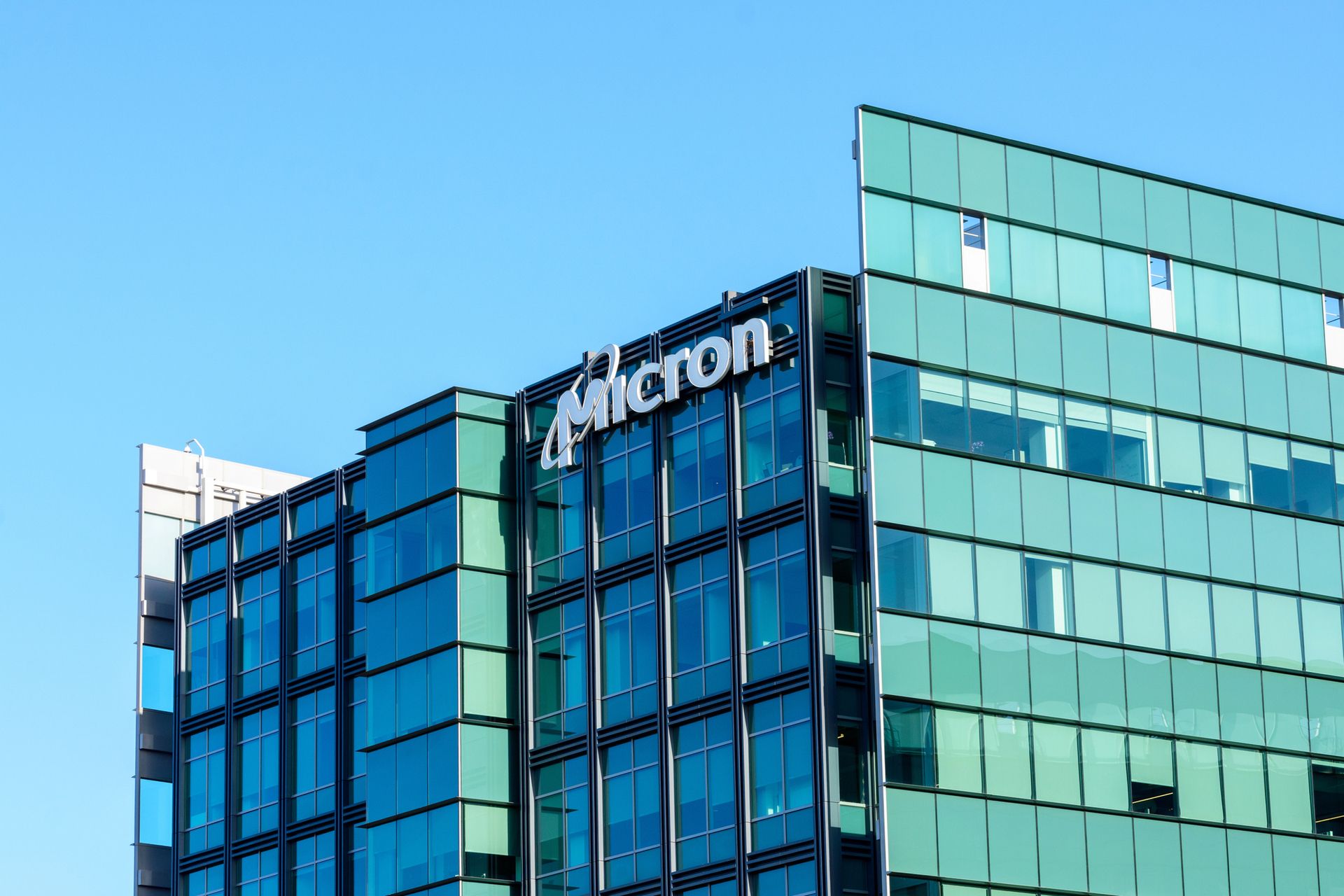
Micron | MU
Price: $276.27
Micron has become the AI memory trade, and the numbers are doing all the talking.
The stock is up more than 200% year to date, powered by a surge in demand for high-performance DRAM and storage tied to AI-heavy data centers, plus a pricing environment that has turned from ugly to very favorable.
Recent results were strong, and the guidance tone has helped push the idea that this cycle has more runway than the market typically gives memory names.
The main risk is also the classic risk: memory is cyclical, and when supply catches up, pricing can roll over quickly.
For now, the setup is still supportive. AI workloads are memory-hungry, and the high-end part of the market tends to stay tighter longer.
That is how you get margin expansion that surprises people who are still thinking like it is 2018.
Why it matters for you: MU is a high-octane way to play the AI buildout.
If AI demand stays hot, memory pricing can stay stronger for longer, which is when Micron keeps beating expectations.

Unlock Market Insight (Sponsored)

Curious how seasoned investors structure their crypto approach?
This free guide lays out a streamlined three-step framework built for those seeking growth-focused opportunities in a rapidly shifting market.
It breaks down a core asset for long-term exposure, satellite plays designed for targeted bursts, and a leveraged strategy aimed at extended cycles.
The full blueprint is available at no cost—but only until midnight.
Competitors are already moving, and hesitation could mean missing the window.
Secure your free copy before access closes.
Broadcom | AVGO

Price: $349.32
Broadcom is the quiet giant that keeps ending up in the most important parts of the AI plumbing.
It is not the headline magnet like GPUs, but it is right in the flow of the buildout through critical chips and infrastructure exposure that scales with enterprise compute needs.
The bullish framing lately is simple: a small club of companies could realistically cross the $2 trillion market cap line, and Broadcom is in that conversation because it has both scale and AI leverage.
The trade-off is valuation. When a stock is priced like a winner, the market wants clean execution and steady demand, not excuses.
Still, Broadcom has a habit of being underestimated because it looks boring until you zoom out.
If AI is a long-term infrastructure spend cycle, the firms with sticky enterprise relationships and key components tend to compound quietly.
Why it matters for you: AVGO is a steadier way to own AI infrastructure.
If you want exposure without living and dying by one product cycle, Broadcom can act like the calmer compounder in the room.

Amazon | AMZN

Price: $232.14
Amazon is getting pulled into the AI storyline again, this time through capital and chips.
Reports say OpenAI is in talks with Amazon about an investment that could exceed $10 billion, along with a potential agreement that includes using Amazon’s AI chips.
That is a big deal because cloud is no longer just about renting servers. It is a strategic race to lock in customers, hardware stacks, and long-term compute commitments.
AWS has been building its own silicon for years, and the payoff is twofold.
Better unit economics and a stronger moat if customers adopt the chip ecosystem instead of treating AWS as a commodity.
A deeper OpenAI relationship would also reinforce the idea that the biggest AI players want diversified compute partners, not a single pipeline.
Even if the details stay fluid, the direction matters.
AI demand is driving massive infrastructure commitments across the industry, and AWS is determined to be the default toll road.
Why it matters for you: If AI partnerships drive higher utilization and strengthen AWS’s chip strategy, AMZN benefits through both growth and margin leverage over time.

JPMorgan Chase | JPM

Price: $325.93
JPMorgan is being treated like the best-run bank in the country, and the valuation reflects it.
The stock trades at a premium to peers on price-to-tangible book, which usually triggers the same question: is it too expensive, or is it just the cost of owning the safest operator with the most revenue levers?
The bull case is not complicated. JPM is not a one-trick lender.
When one lane slows, another tends to pick up the slack, like payments, wealth, credit cards, trading, and investment banking.
That matters in a housing market that refuses to unfreeze. If mortgage activity stays muted, the bank that can still grow fee income and defend margins has the advantage.
JPM’s scale in deposits, technology, and distribution also shows up in consistency.
It can invest through cycles, keep risk management tight, and still return capital through dividends and buybacks.
Even when the stock looks “not cheap,” investors keep paying up for reliability.
Why it matters for you: If the economy stays steady but housing stays locked up, JPM is built to win anyway.
The premium is the market betting that resilience beats bargain hunting.

Trivia: Which U.S. bill has been in circulation the longest without a design change? |
📊 Stat of the Day: Nearly 30M households, under 4%
Nearly 30 million households, about 54% of primary mortgage-holders, have mortgage rates at or below 4%.
That is the lock-in effect in one line. Even with rates falling, many owners will not trade a 3-handle mortgage for something above 6%.
The result is fewer listings, fewer transactions, and a housing market that stays tighter than most forecasts expect.
For investors, it also means the financial winners may be the banks that do not need a mortgage boom to grow earnings.
Best Regards,
—Noah Zelvis
Everyday Alpha