- Everyday Alpha
- Posts
- Lending, Not Pretending: A Profitable Financial Services Misprice
Lending, Not Pretending: A Profitable Financial Services Misprice
Written off as risky and left for dead, this lender is posting record profits while the market looks the other way. When perception finally catches up, you could already be ahead.

Noah Zelvis
January 07, 2026
This is what real mispricing looks like: strong profits paired with low expectations and lingering doubt.
By the time the crowd gets comfortable with the story, the door to value may have slammed shut. Are you walking through before that happens?

Early Access (Sponsored)

Liquidity is rising, institutions are investing, and regulations are becoming friendlier.
The foundation is set for what could be a major market move.
Investors who act now may benefit most.
A 250-page digital system reveals how to grow crypto wealth safely, without risky speculation or constant stress.
Download now and claim $788 in bonuses—including the #1 crypto pick this cycle.
Access the Crypto Guide
Never Miss a Stock Alert Again!
We now send our daily picks via text too — so you’ll get the same high-conviction ideas, even if you miss the email.
OppFi, Inc.

January 07 – Pre‑market
Ticker: OPFI | Sector: Credit Services / Financial Services | Market Cap: ~$880.90M
30‑Second Take
OppFi is being priced like a problem child in a sector investors still don’t trust. That’s exactly the opportunity.
This is a profitable, cash-generative fintech coming off a record quarter, with improving credit performance and tighter underwriting.
Value here isn’t about hope or a turnaround fantasy. It’s about a business that’s already working, already earning, and still being valued as if it’s one headline away from trouble. That gap between perception and reality is where this stock could thrive in your portfolio.
Trade Setup
Time frame: Short- to medium-term
Edge type: Value re-rating + sentiment catch-up
This is a value trade with a catalyst-rich path, not a “park it and forget it” compounder.
Major Tech at Risk (Sponsored)

Apple, Microsoft, Amazon, Alphabet, Meta, NVIDIA, and Tesla could be in a world of pain because of this shocking new discovery.
In this new exposé, Porter Stansberry shares everything you need to know.
[Read the Full Report Now]
Poll: What do you trust more when buying something new? |
Snapshot Table
Metric | Value | Current Stance |
|---|---|---|
Price | $10.20 | Below average |
52‑week range | $6.81 - $17.73 | Below average |
Short interest | 17.58% | Above average |
Next catalyst | Profitability update |
Chart
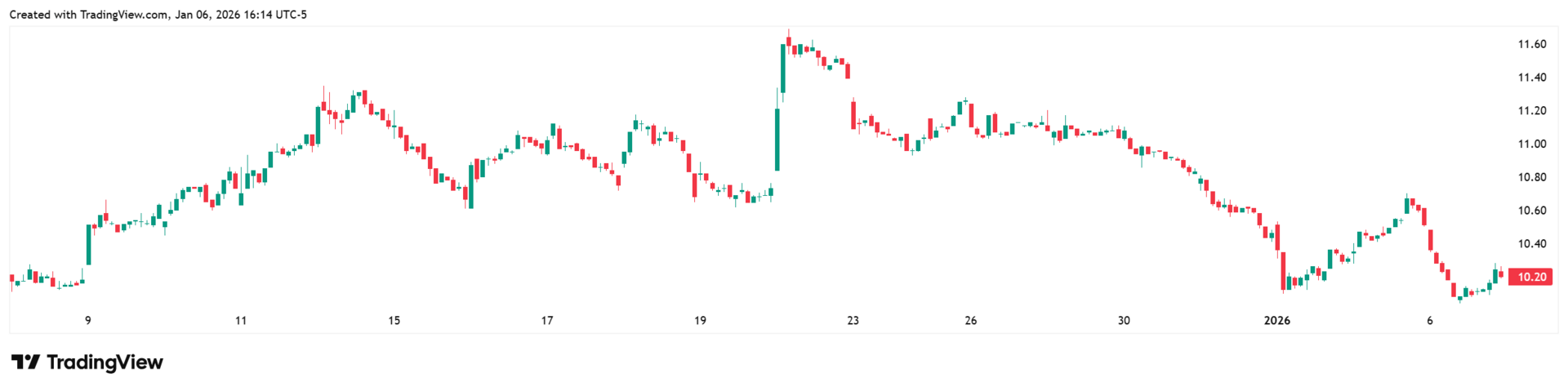
1-month trading summary: Don’t be fooled. This chart isn’t panicking. It’s yawning. Over the past month, OppFi has slipped lower in a slow, unglamorous pullback that looks far more like boredom than fear.
The stock ran, cooled off, and then drifted as short-term traders moved on to louder stories.
That’s not distribution, it’s attention leaving the room. Volume confirms it. There’s no rush for the exits, no capitulation, just a stock quietly marking time while the fundamentals do the heavy lifting in the background.
Bull Case
A profitable lender hiding behind an ugly label: Here’s the thing about OppFi: the stock is priced like it's one bad month away from trouble, while the business behaves like it's finally in control.
This isn't a "maybe it works" story anymore. The model is already spitting out real profits, and not in a flimsy, financial-engineering way.
It’s coming from better borrowers, tighter underwriting, and management that seems very aware of past mistakes and determined not to repeat them.
What makes this interesting is how little optimism is baked in. Nobody's paying for blue-sky assumptions.
The valuation basically says, "Sure, you're making money now, but it won't last." If OPFI proves it can stay boringly competent, that thesis starts to fall apart. And when a market assumption breaks, repricing tends to happen fast.
The moments that change the narrative: The easiest catalyst is also the least exciting, which usually makes it the most powerful: another solid quarter. OPFI doesn't need to surprise anyone.
It just needs to repeat. Each clean earnings print chips away at the idea that recent profitability was a fluke, forcing the market to update its mental model.
Then there’s capital discipline. When a company like this keeps generating cash, questions start getting asked.
Why isn’t it valued higher? What do you do with the money? Buybacks, balance sheet clean-up, or even just signalling restraint can all act as quiet but effective re-rating triggers.
Sentiment is the wild card. Subprime fintech is still a four-letter word, which means ownership is thin and expectations are low. That’s fertile ground.
Price targets: Analysts are fairly aligned, with the low at $13.50 and the high at $16.00.
Nothing broken, nothing crowded: What stands out here isn’t momentum, it’s restraint. OPFI isn't being chased or dumped.
Price action has flattened, ranges have tightened, and the stock has slipped into that awkward middle ground where some traders lose interest. That’s often where value gets to work.
Bear Case
The business works, until it doesn’t: The risk with OppFi isn't the numbers. It's the customer. Subprime lending always looks smartest right before it gets tested.
If the consumer weakens meaningfully, losses can rise fast, and confidence can disappear even faster. This is not a business with a long runway for mistakes.
A small fish in a big pond: In the subprime lending world, competition isn't friendly, and it isn't forgiving.
OppFi operates in a space where larger, better-capitalised players can absorb volatility more easily and smaller players are constantly under pressure to stay relevant.
Names like Enova International have scale, diversification, and market trust. That matters in a downturn.
Bigger peers can pull levers OPFI can’t, whether that’s shifting borrower mix, tightening credit faster, or riding out periods of weaker demand without spooking investors.
On the other end of the spectrum, aggressive lenders chasing growth can force pricing pressure across the industry.
If competitors loosen standards to grab share, OPFI faces an uncomfortable choice: protect credit quality and risk slower growth, or lean in and risk undoing the discipline that drives profitability.
The cycle still matters: Even with solid execution, OppFi is tied to consumer health.
If household stress rises, credit can deteriorate quickly, and the market won't wait around for confirmation.
Sentiment toward subprime lending remains fragile, which caps enthusiasm and amplifies bad news.
Choose your moment: Let’s be honest. This is a speculative value play running under the radar. It isn’t a crowded room.
OPFI doesn’t have hedge funds tripping over each other to own it, and it’s not showing up in momentum screens or dinner-party portfolios.
The stock still carries too much baggage for that. Subprime stigma, regulatory anxiety, and old fintech scars keep most investors at arm’s length.
That’s exactly why this value case works.
Quick Checklist
✅ Thesis still valid after today’s close
✅ Volume confirms move above key levels
✅ Catalyst date double-checked (January 06, 2026)
Deep‑Dive Links
That’s all for today’s Everyday Alpha. We’ll have a new pick for you every morning before the market opens, so stay tuned!
Best Regards,
—Noah Zelvis
Everyday Alpha